PRODUCTION
HIGH-RES PHOTO DOWNLOAD
CREDITS
Please mention the Photo Credit: Joël Tettamanti




FROM TRUCK TO BAG
It all started with the idea of making a robust messenger bag from a discarded truck tarp. Today, of course, FREITAG goes a lot further than processing colorful transit waste – we use a variety of upcycled, recycled and scrap materials for our bags and accessories. Nevertheless, material from road-tested tarps still plays the leading role. We divide the journey from truck to one-off bags into five stages.
1. FINDING THE TARPS: OUT SHOPPING IN EUROPE
Even today, we continue to turn only discarded truck tarps into FREITAG bags. But you don't find the retired, multicolored tarps just lying by the road. So, we have a three-strong team combing Europe's highways and byways for the most outstanding tarps and bringing up to 130 tons of them to Zurich every year. The first step in the process is to test the tarps for their constituents and thus guarantee the safety of FREITAG products.
2. ON THE CUTTING TABLE: WHERE THE TARPS ARE DISSECTED
Turning dirty waste products from the road into raw materials for desirable one-off items calls for the skillful hands of our tarp dismantlers. Using cutters, pliers and sheer muscle power, they relieve the bulky tarps of their straps, buckles and fittings. Tarps considered dry, brittle or too thin are rejected, while the usable sections are cut into machine-washable pieces and sorted by color.
3. WASHING THE TARPS: WITH RAINWATER FROM THE FACTORY ROOF
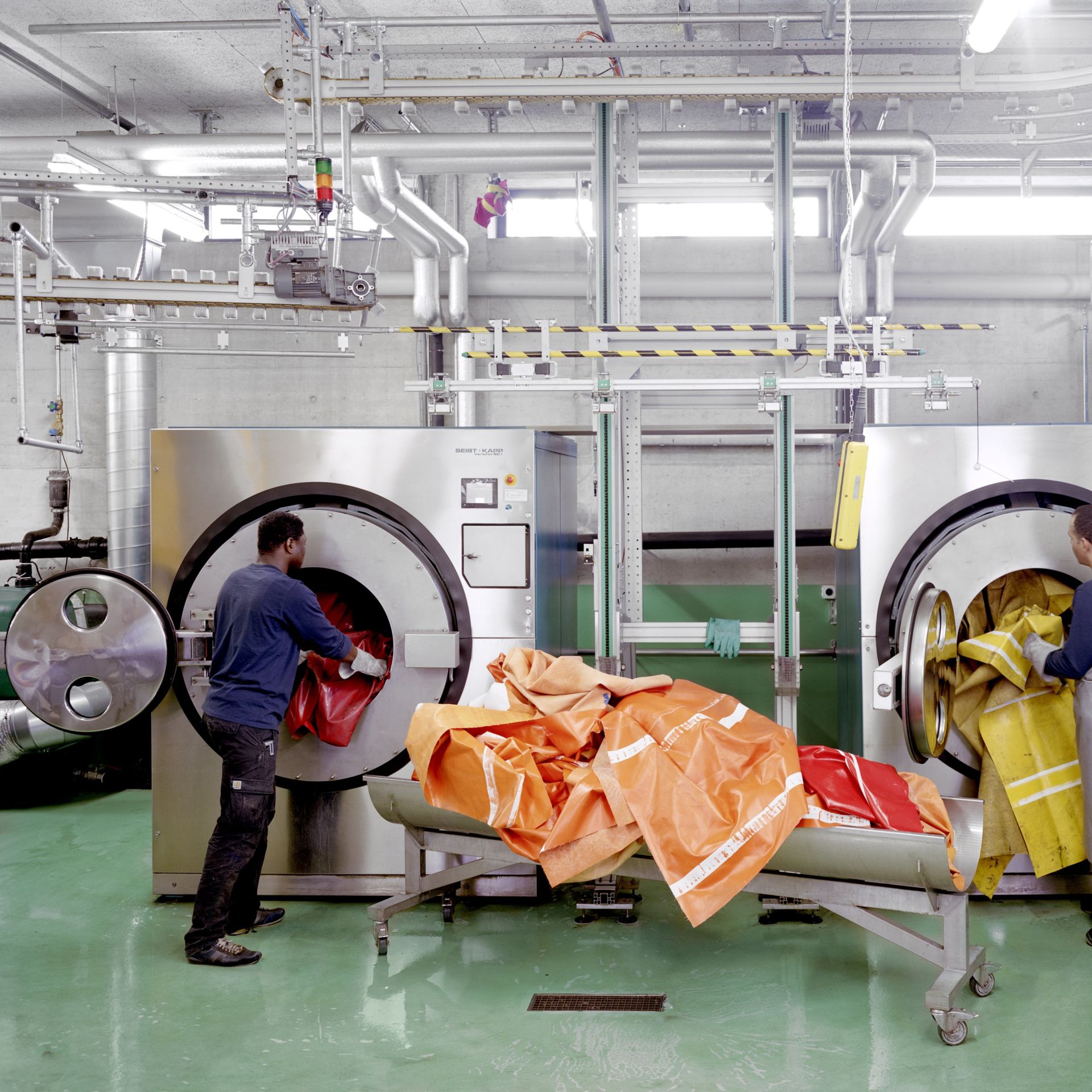
The tarp pieces then go into three extra-large washing machines, where we free them of the dirt and fine dust accumulated on the road to reveal their unique patina. To do this, we collect rainwater on the factory roof, which covers around half of our water consumption. We use warmth drawn from the dirty water to heat the fresh water, and at the end of the washing process, the water – by now, almost clean – is retained and reused for washing the next batch of tarps. When the tarp pieces come out of the drying room, we decide which bag model they are best suited for.
4. BAG DESIGN: THE CREATION OF ONE-OFFS
Cutting tarp pieces is far more than just hard work. Because it's right here that we decide what each FREITAG one-of-a-kind bag will look like. For each model, we have a selection of transparent templates that are arranged on the used truck tarps so that we can cut as beautiful and as many bags as possible from them. Each piece is designed cut by cut, partly by hand and partly with machine assistance. The individual parts of each bag are then sent to our production partners in Europe for sewing.
5. FROM THE SEWING ROOM BACK TO THE STREET
At this point, our long-standing partners in Portugal, the Czech Republic, and Bulgaria, get their sewing machines rattling away to transform the tough tarp sections into the final product. Back in Zurich, the finished bags are thoroughly inspected by quality control and then photographed. Finally, we send them to the FREITAG Stores or one of our sales partners or directly via our Online Store to customers around the world.
LESS TEXT - MORE STEPS
Our unique bag and accessory manufacturing process breaks down into five main stages with many separate steps. From its time on a truck cruising the roads to the actual sale, a unique FREITAG piece goes through numerous stages in and around our factory:
- Truck spotting
- Tarp removal
- Extract test sample
- Testing constituents
- Confirming that tarp is safe
- Disassembly
- Washing
- Drying
- Bag design
- Shipping to sewing partners
- Sewing
- Quality control
- Photography
- Shipping
- Sale
Using recycled materials and short transport routes in our supply chain keeps our carbon footprint comparatively low. In 2025, it amounted to 2037 metric tons of CO2 equivalent, or about 287 flights around the world. Along our entire value chain, we are actively working to further reduce our direct and indirect greenhouse gas emissions.
HIGH-RES PHOTO DOWNLOAD 1. RAW MATERIALS
CREDITS
Please mention the photo credits (see image caption).


HIGH-RES PHOTO DOWNLOAD STEP 2. CUTTING THE TARPS
CREDITS
Please mention the photo credits (see image caption).


HIGH-RES PHOTO DOWNLOAD STEP 3. WASHING
CREDITS
Please mention the photo credits (see image caption).


HIGH-RES PHOTO DOWNLOAD STEP 4. BAG DESIGN
CREDITS
Please mention the photo credits (see image caption).


HIGH-RES PHOTO DOWNLOAD STEP 5. SEWING
CREDITS
Please mention the photo credits (see image caption).


